Want Clean Air and Water? Who Can Help You Most?
As a child, I was sick quite often because of pollution. The protections passed later helped, but they are losing ground. How can we protect our families today?
 connies
Want Clean Air and Water? Look at Who Can Help.
Opinion: From a Longtime Floridian
I grew up in Pensacola, Florida, downwind of a chemical plant. Sometimes cold winds blew the plant’s pollution into our area. When it did, I often struggled to breathe. I got sick a lot and had frequent bouts of asthma and bronchitis. I was young, and it was scary struggling to breathe.
It was deadlier for fish. I often went to the bayou near my house because it was beautiful and felt peaceful. One day when I went, I was shocked to see thousands of fish gasping for air and dying. There was bloody red water as far as I could see. The same chemical plant that hurt me was dumping tons of toxic waste into area rivers and streams.
When Congress finally passed the Clean Air Act and Clean Water Act, the EPA was able to force polluting companies to stop dumping chemical waste into the water and put air quality protections in place.
Our family celebrated. I thought it meant no more dying fish, no more sick children from chemical plants. The air and water we all shared would finally be safe.
I was wrong.
I’ve since learned that every law to protect the environment was hard-won, and none of them stay won on their own. Some industry leaders, though not all, would rather fund politicians who fight to weaken safeguards than invest in keeping their neighbors safe.
How Fast Are We Going Backwards?
Today, the agency that cleaned up that bayou has been weakened. Its budget was already at a historic low, and now the White House wants to cut it in half.
Washington is pushing ahead with 31 actions to roll back environmental and public health protections. On February 12, 2026, the EPA announced the repeal of federal greenhouse-gas limits for cars and trucks. That could mean more heat-trapping pollution and greater warming over time.
Scientists, including Carlo Buontempo, who directs a climate service that tracks global temperatures, report that 2025 was the third-hottest year on record.
A hotter climate? Here in Florida, that concern hits close to home. And globally, dangerous heat waves, raging fires, devastating floods and massive storms show how much is at stake.
A New Kind of Plant Next Door
The polluters of my childhood had smokestacks. Today’s newest neighbors are giant data centers built to power artificial intelligence, and developers have their eyes on Florida’s open land.
These buildings can use huge amounts of water to keep their computers cool, often pumped from the Floridan Aquifer. That’s the same underground source that supplies drinking water to about 11 million people and the wells farmers and ranchers depend on to feed us. Many data centers also run diesel generators or gas turbines that can foul the air for miles around.
More Floridians are paying attention. In a statewide poll, 68 percent said they don’t want data centers in their communities, and more than a dozen counties have paused or banned new projects.
Meanwhile, data center interests have given more than $22 million to Florida campaigns this year. Voters deserve to know which candidates will put our air, water and health first.
That’s why it matters who we elect to represent us in Washington. It is why one change to Central Florida’s map should concern anyone whose life or loved ones are affected by asthma, Parkinson’s, Alzheimer’s or other illnesses that research has linked to pollution.
Seven Counties for One Representative! Seriously?
This spring, Florida redrew its congressional map. Central Florida’s District 9 changed dramatically, shifting from Democratic-leaning to Republican-leaning. That puts Rep. Darren Soto at risk, and losing him would be a loss for everyone, not just one party.
His new district includes all or parts of seven counties: Orange, Osceola, Polk, Highlands, Glades, Okeechobee and Indian River. It stretches roughly 150 miles south from the Orlando area, with an eastern section reaching Vero Beach on the Atlantic coast. A district that size makes it much harder for any lawmaker, of either party, to meet face to face with the people they serve.
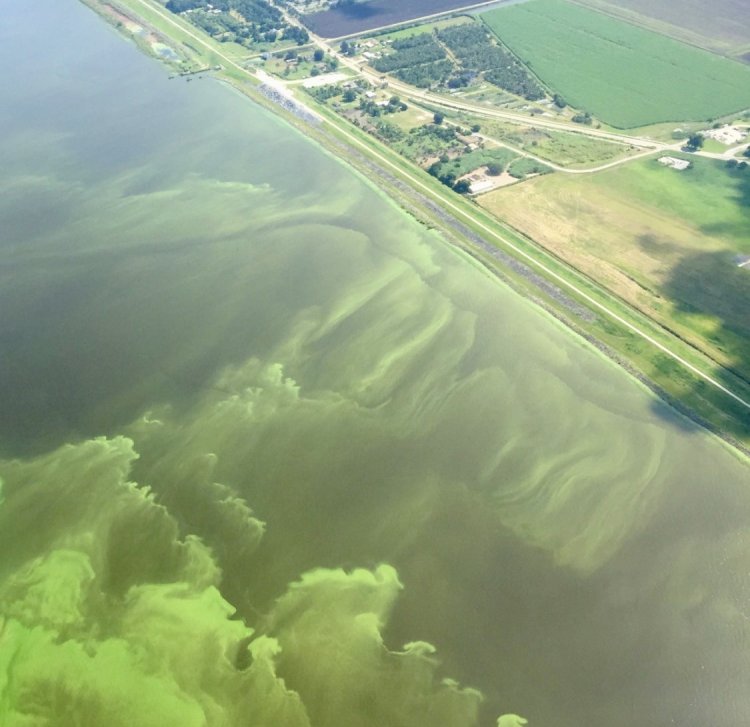
The algae-covered waters of Lake Okeechobee pictured here are a familiar warning for nearby communities. Protecting air and water quality there—and throughout Florida—should matter to every voter.
A Record of Results
In nine years in the Florida Legislature and nearly ten in Congress, Soto has fought for what matters most to me: clean air, clean water and Florida’s natural treasures, like the Everglades and our springs. He tried to ban fracking in Florida long before most people were talking about it. He helped clean up Lake Toho and the waters that feed the Everglades, and helped set aside $10 million for our springs. His bill to restore damaged coral reefs became law in 2023. Audubon Florida named him a Champion of the Everglades.
What matters just as much to me is how he treats people. In Tallahassee, he passed a law to look after the families of firefighters who died in the line of duty, and helped fund housing for veterans getting back on their feet. In Congress, he pushed the VA to try a new PTSD treatment developed at UCF. After Hurricane Irma, he got FEMA moving so seniors forced from their Kissimmee homes could return. This year, he introduced a bill to speed up disaster help and bring down housing costs. And he shows up: he has missed fewer than 1 percent of his votes.
Working Across the Aisle
What I consider a leadership asset is how often Soto works with Republicans to solve problems. President Trump signed his bill protecting marlin, sailfish and other big game fish. He and Republican Gus Bilirakis wrote a bill to map where sinkholes are likely to open, and it passed the House in 2025. He teamed up with Republican Vern Buchanan to protect manatees. When an oil company wanted to drill in the Everglades, he joined Republicans and Democrats alike to push back.
Why All This Matters So Much Now
Our aquifer, the data centers that want our water and power, and housing costs that squeeze seniors, veterans and families are not problems for beginners. They need someone in Washington who already knows the way.
Clean air and clean water aren’t Republican or Democratic issues. Soldiers serving side by side don’t ask each other’s party, and we shouldn’t either when our children’s health and our planet are on the line. We need solutions for all.
Rep. Darren Soto has spent nearly two decades working on issues that affect Floridians, from clean air and water to veterans, seniors, health and housing. The newly redrawn map cannot measure his knowledge, experience or accomplishments; voters must decide what that record is worth.
As you consider your choice, look closely at every candidate’s experience, accomplishments and ability to work with others to solve serious problems. You do not have to agree with every position to recognize the value of effective leadership.
Look at the record, consider the new district lines, make your own decision and be sure to vote.
Sources
E&E News (EPA 2027 budget request, April 2026); Cleanfax (2026 EPA budget and deregulation); Harvard Environmental and Energy Law Program (vehicle greenhouse gas rule, February 2026); Tampa Bay Times (data center donations and University of North Florida poll); WUSF (Floridan Aquifer and data center water use); Local 10 (county data center pauses); Environmental and Energy Study Institute (data center air pollution); WPTV/CNN (2026 redistricting); Fox 35 Orlando (new District 9 counties).
Three-Sentence Overview
As a child, I was sick quite often because of pollution. The protections passed later helped, but they are losing ground. How can we protect our families today?
Hashtags
#CleanAir #CleanWater #DataCenters #Florida #PollutionAndHealth #FloridaAquifer #EPA #Redistricting #HealthRisks
Photo Caption
An algae bloom covers water in Lake Okeechobee, July 2016—a reminder of why protecting Florida’s waterways matters. Photo: Nicholas Aumen, USGS.
Photo Source
https://www.usgs.gov/media/images/lake-okeechobee-fl-algal-bloom-july-2016